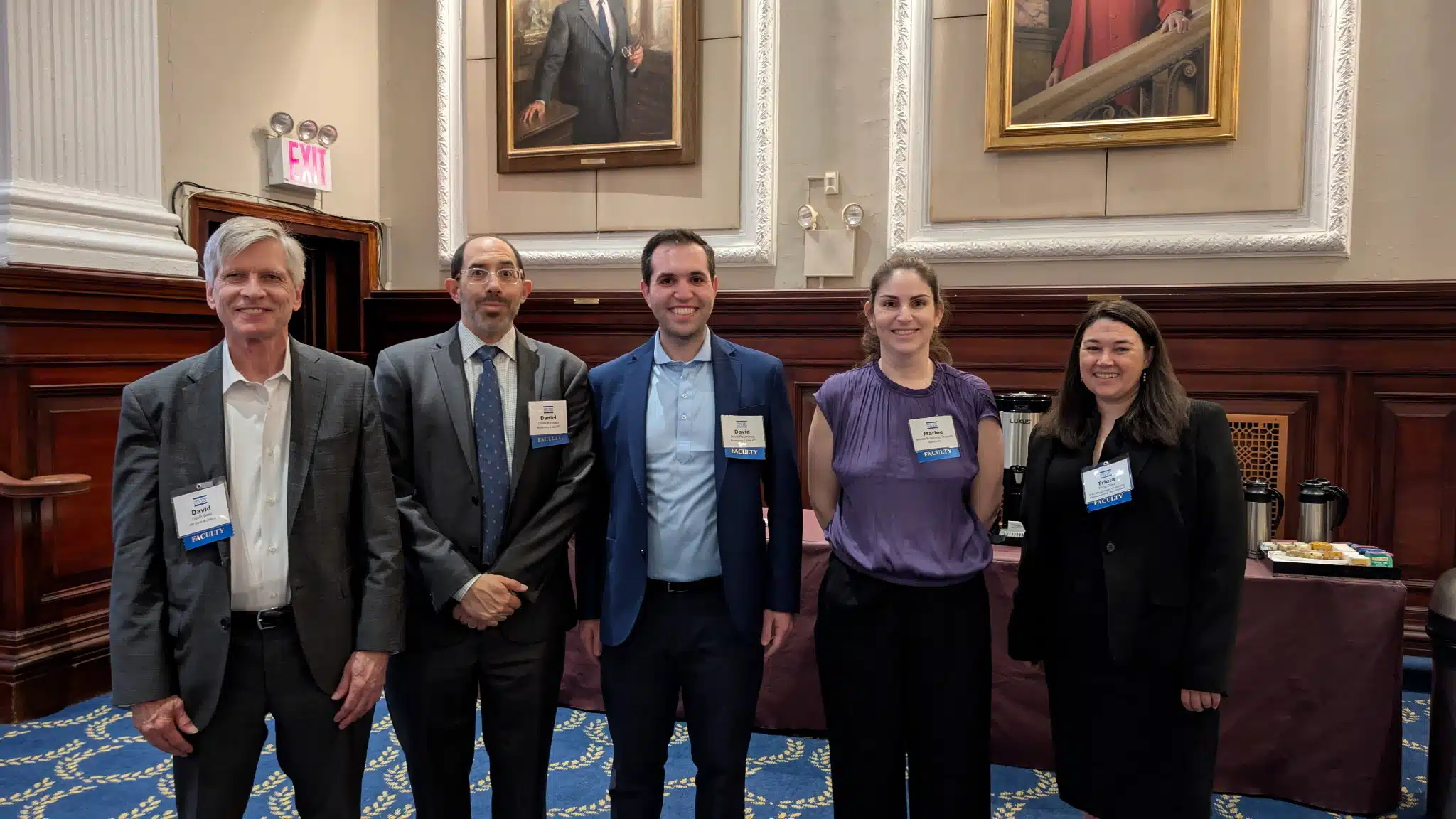
In May 2025, Hill West Architects Partner David West joined a panel hosted by the New York City Bar Association to examine the evolving landscape of affordable housing development in New York City, driven by recent zoning changes and new tax incentive programs such as 485x and 467m.
The event, titled “City of Yes and Beyond: Navigating Zoning and Incentives in a Changing New York”, brought together leading voices in architecture, development, and housing policy. Joining West were Marlee Busching-Truscott (Hudson Companies), Tricia Dietz (NYC HPD), and moderator David Rosenberg (Rosenberg & Estis).
City of Yes: Unlocking New Development Opportunities
West shared firsthand insights into how the City of Yes zoning initiative transform project feasibility across the five boroughs. He noted a “huge uptick in feasibility studies” as developers reevaluate underutilized or previously constrained sites.
“Almost invariably, there are real, meaningful, significant improvements in what can be built,” West said. He highlighted how recent changes, such as the elimination of the sliver law and more flexible bulk and setback rules, are breathing new life into small- and mid-scale development.
According to West, the City of Yes is already proving to be a powerful catalyst for new housing, particularly on sites that were previously marginal under outdated zoning regulations. “It’s a real stimulant,” he added, citing several projects that have been revived or reimagined as a direct result of the reforms.
485x and 467m: Tax Incentives Bring New Challenges
While zoning reforms create new possibilities, navigating New York City’s layered incentive programs, particularly the new 485x tax abatement, adds complexity. West addressed how 485x’s prevailing wage requirements and threshold tiers influence building design.
“We’re seeing teams break up projects into smaller buildings to stay below wage trigger points,” he explained. Although 485x is intended to encourage affordable housing production, West cautioned that certain provisions may have unintended consequences for scale and deliverability.
He also pointed to the emerging 467m incentive as another area developers are watching closely. These tools, while essential, require careful modeling to ensure both compliance and viability.
Strategy, Optionality, and Early Analysis
When asked how developers and architects should approach these changes, West offered this guidance: “The first step is optionality. There are often multiple pathways a site can take – understanding those options upfront is key.”
With zoning reforms, affordable housing mandates, and incentive programs, early-stage feasibility analysis is more critical than ever. Whether assessing a residential conversion, exploring a mid-rise affordable project, or modeling the implications of 485x, successful outcomes will hinge on agility and precision in planning.
Thank you to the New York Bar Association for hosting the informative event and to Rosenberg & Estis for the photo.
